Importing Refined Sunflower Oil in 5-Litre Bottles: A Wholesale Buyer's Guide
The 5-litre PET bottle is the workhorse pack for refined sunflower oil. Here is how to specify it, why a container of oil fills on weight rather than space, and which documents decide whether it clears.
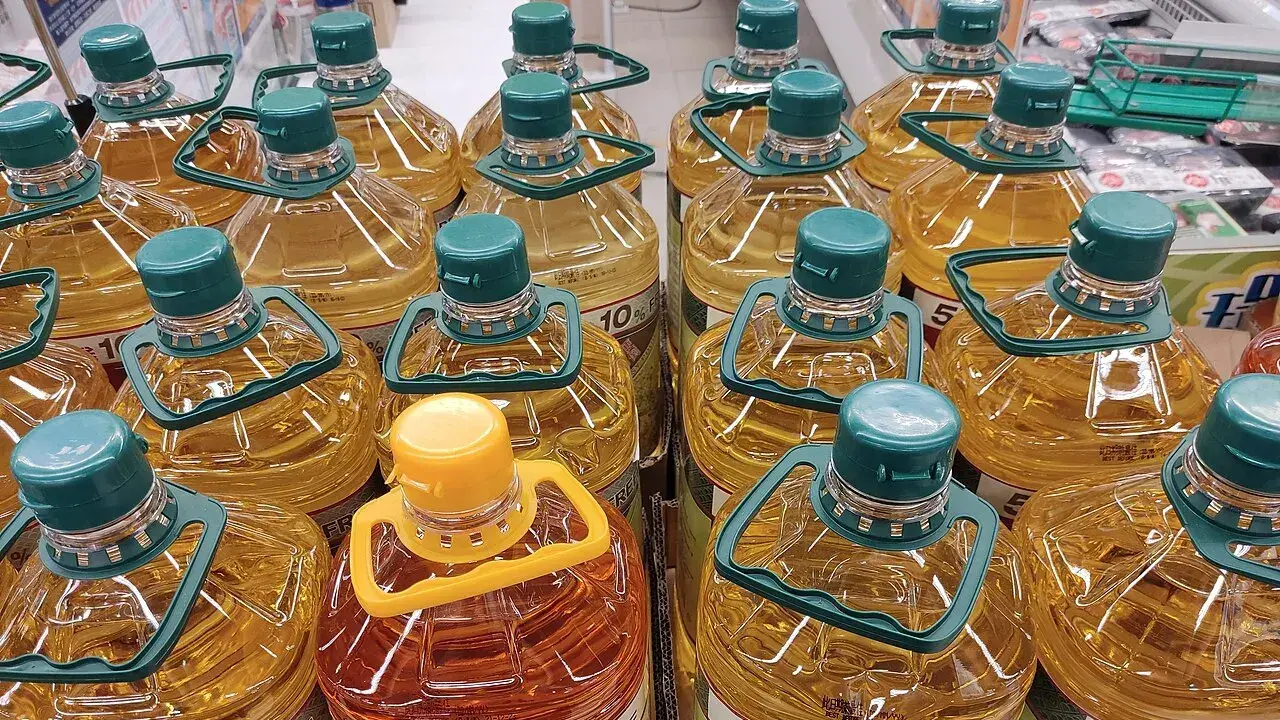
Refined sunflower oil moves in more formats than almost any other edible oil: flexi-tanks for refiners, drums for manufacturers, bottles for anyone selling to households. Among the bottle sizes, the 5-litre PET bottle is the one wholesale buyers ask for first.
Why the 5-litre bottle dominates wholesale
Five litres sits at a useful commercial point: large enough that packaging cost per litre drops well below the 1- and 2-litre retail sizes, small enough for one person to carry — hence the moulded handle. That makes it the default pack for restaurants, bakeries, canteens, street-food vendors and households that cook at volume.
The advantages are practical: lower packaging cost per litre than small retail bottles, without the handling gear drums and IBCs demand; no decanting, so no repacking operation and no hygiene risk from one; and a pack that sells as it arrives. A damaged 5-litre bottle costs you five litres, not a 200-kilogram drum.
The trade-off is cube — handled bottles waste carton space and you ship the PET as well as the oil. Usually worth it for a pack that needs no further work.
Specifying quality
“Refined sunflower oil” is not one product. At minimum, establish these in writing before you accept a price:
Grade. Refined, bleached and deodorised (RBD) is the standard food-service grade: pale, neutral and stable at frying temperatures. Crude sunflower oil is a different product at a different price and is not interchangeable.
Oleic type. Standard, mid-oleic and high-oleic grades differ in fatty acid profile and in how they hold up under prolonged heat. High-oleic costs more and is usually specified by buyers supplying commercial fryers.
The specification sheet. The recognised reference is the Codex Alimentarius Standard for Named Vegetable Oils, CXS 210-1999, which covers sunflowerseed oil including its mid-oleic and high-oleic types and sets the parameters a specification should address: fatty acid composition, free fatty acids, peroxide value, moisture and volatile matter. The text sits in the Codex standards list. Ask for a specification against that standard and a certificate of analysis for the batch you are buying, not a generic sheet — and if a limit on a supplier’s sheet looks inverted, query it rather than assuming a typing slip. The figure in your contract is the one you can enforce.
Packaging the pack
Three layers around the bottle decide whether a container arrives saleable. The bottle: food-grade PET, tamper-evident closure, induction seal, confirmed neck finish if you will re-label. The carton: four per carton is common at 5 litres but not universal, and the count drives everything downstream. The pallet: dimensions, tiers, stretch-wrap and corner protection — oil is heavy and bottles deform, so a weak pattern crushes bottom layers.
Our refined sunflower oil listing publishes the pack formats available, which run from 500 ml PET through the 5-litre bottle, jerry cans from 2 to 25 litres, tins, metal and poly drums, and 21 MT flexi-tanks. The right format depends on who you are reselling to, and it is worth settling that before you discuss price.
Loading a container
The point that catches buyers used to dry goods: a container of bottled oil fills on weight, not on space. Oil is close to the density of water, and with PET, cartons and pallets added, a dry container hits its payload limit with cube still spare.
So a 20FT is often right for bottled oil even though a 40FT holds twice the volume — you would reach the weight limit long before filling the 40FT and pay for air. And your order quantity should come from a loading plan built on real carton weights, not a volume guess.
Do not accept a piece count without its assumptions. Ask for the carton gross weight, cartons per pallet, pallets per container and the resulting total, then check that total against the container payload limit and your destination’s road weight limits — a load that is legal at the port of loading can be over the limit on the road at the other end.
Temperature matters too: sunflower oil can cloud when cold, a cosmetic change that alarms customers who have not seen it. On winter routes, ask whether the oil has been winterised.
Incoterms and what is actually in the price
Three terms cover most edible oil business, and they differ only in where the seller’s responsibility stops:
- FOB — seller delivers on board at the named port of loading; ocean freight and insurance are yours from there.
- CFR — seller pays ocean freight to the destination port; insurance is yours.
- CIF — as CFR, plus marine insurance to the agreed minimum cover.
In all three, risk passes when the goods are loaded on board — which surprises buyers who read CIF as the seller carrying risk to destination. It does not; it means the seller buys the insurance.
None of the three includes destination charges: terminal handling, clearance, duty, VAT and inland haulage are yours. Comparing an FOB price against a CIF price without adding those back is the commonest way a quotation gets mis-read. Use the current Incoterms rules from the International Chamber of Commerce and name the edition in the contract.
Documents for edible oil imports
Food imports carry more paperwork than general cargo. The commercial set is normally a commercial invoice, packing list, bill of lading and certificate of origin. Edible oil then usually adds a batch certificate of analysis, a health or free-sale certificate, and — depending on destination and customer — Halal or Kosher certification.
Classification drives duty and determines which rules apply. Refined sunflower-seed oil falls under HS heading 1512.19; crude sits under 1512.11. The Harmonized System is maintained by the World Customs Organization, but national tariff lines run beyond the six-digit heading, so confirm the full code with your broker.
Establish what your destination requires before loading: a certificate that must be issued at origin cannot be obtained once the vessel has sailed.
Verifying a supplier
Before money moves, get five things in writing: the specification and a batch certificate of analysis, which you should actually read; the pack format, carton count and pallet pattern; the Incoterm, port of loading and who insures; the inspection arrangement, since independent pre-shipment inspection is normal here and cheap against a rejected container; and confirmation that the documents the supplier can issue match what your customs authority demands. A supplier who answers all five without hedging is telling you something useful.
Frequently asked questions
How many 5-litre bottles fit in a container? It depends on carton weight and pallet pattern, and the binding constraint is weight, not volume. Ask for a loading plan rather than accepting a bare piece count.
What is the difference between refined and crude sunflower oil? Refined oil has been bleached and deodorised — pale, neutral and suited to frying. Crude oil has not, and is normally bought for further processing. They carry different HS codes.
Can I have my own label on the bottles? Private labelling is common at this size. Confirm artwork, your market’s language requirements and lead time with the quotation — label approval often sets the schedule.
Is a 20FT or 40FT better for bottled oil? Usually 20FT, because the load reaches the payload limit before it fills the space. Have both costed against the same loading plan.
What shelf life should I expect? It is set by the producer and stated on the specification for that production. Ask for the shelf life remaining at shipment, not from manufacture.
Request a quotation
We supply refined sunflower oil across the pack formats listed on our refined sunflower oil page, alongside the wider cooking oils and fats catalogue.
Send the grade, pack format, quantity, destination port and preferred Incoterm through the quotation form, or message us on WhatsApp, and we will come back with a specification, a loading plan and a price.
Pack formats above are those published on our product pages; specifications, certificates, quantities and prices are confirmed per order. Import requirements differ by destination and change — confirm them with your broker.